
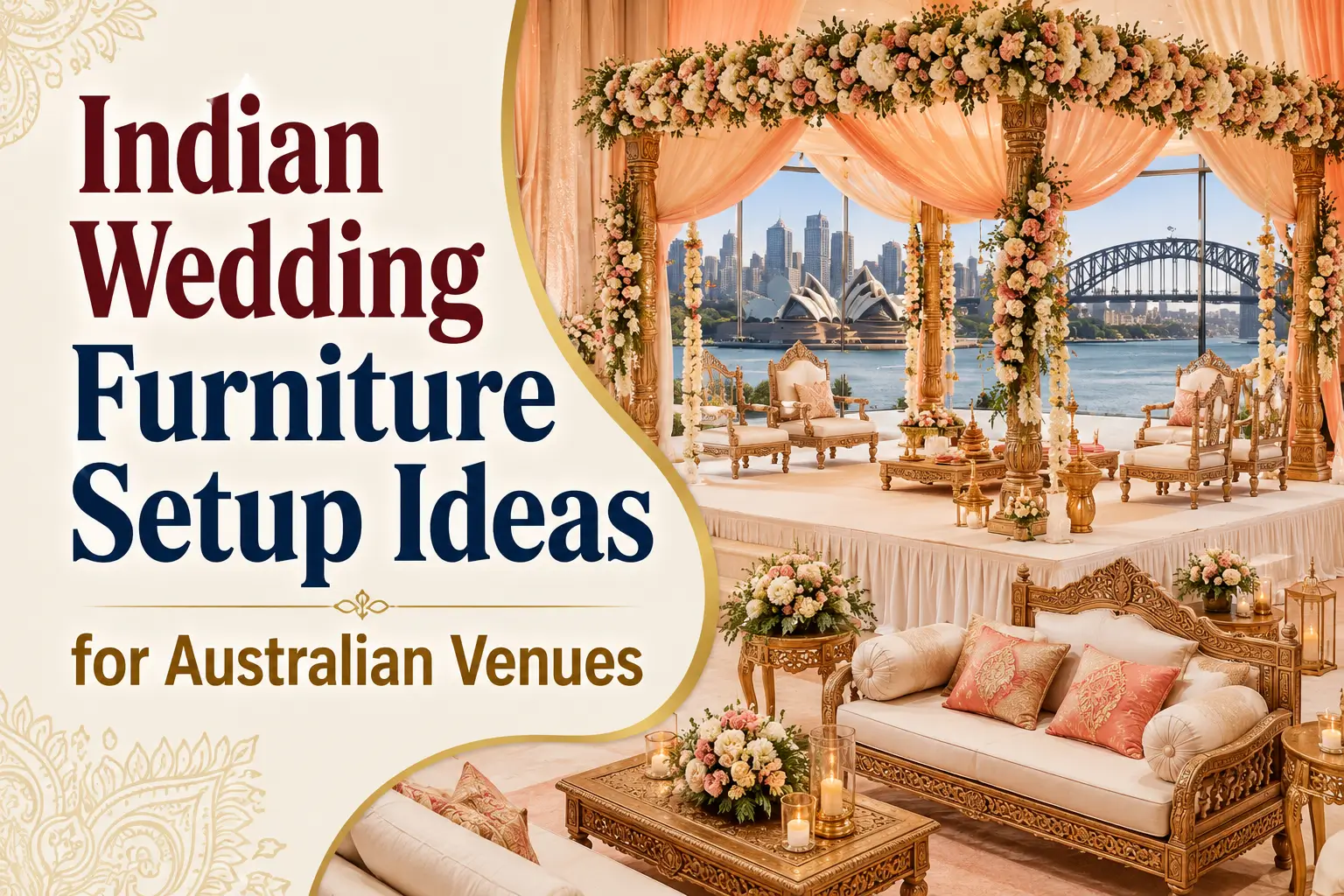
An Indian wedding is a grand affair — ceremonies spanning multiple days, hundreds of guests, and expectations shaped by generations of tradition. The furniture setup needs to match. Proper thrones for the bride and groom. A mandap that frames the ceremony. Ceremonial seating for family. Decorative pieces that elevate the venue.
This guide covers key setup ideas for Indian wedding venues, event companies, and families planning ceremonies in Australia.
The Mandap
The mandap is the ceremonial canopy under which Hindu weddings are performed. Typically a four-pillar structure with a decorated canopy overhead, it frames the couple, the priest, and the sacred fire.
Size considerations. A standard mandap is 2.4m x 2.4m, accommodating the couple, priest, and immediate family participants. For larger ceremonies, 3m x 3m allows more participants under the canopy.
Pillar design. Traditional pillars are carved wooden structures, often with decorative elements at the top and base. Modern mandaps may use metal framework with fabric wrapping, or a combination of wood and metal.
Canopy styling. The canopy itself is typically fabric — silk, draped with floral decoration. Some premium venues use carved wooden or metal canopies for a more permanent structure.
Placement. The mandap is typically centred on one side of the venue, with seating arranged in front. For outdoor ceremonies, consider weather protection — a mandap in full Australian sun can be uncomfortable for extended ceremonies.
Bride and Groom Thrones
Thrones are the ceremonial seating for the couple at the reception and sometimes during parts of the ceremony. These are statement pieces — typically the largest and most decorative furniture at the wedding.
Scale. Wedding thrones are larger than standard chairs — taller backs, wider seats, and more substantial construction to carry visual weight from across a room.
Matching. Thrones are usually ordered as matching pairs, though some couples prefer subtly different pieces to reflect individual personality.
Upholstery. Traditional choices are red, gold, cream, or burgundy velvet or silk. The upholstery should coordinate with the overall colour scheme of the wedding.
Carving. Heavily carved throne backs with traditional motifs are common. Gold-leaf or brass detailing adds ceremonial presence.
Placement. Thrones are typically placed on a raised platform (2-step) at the head of the reception area, so the couple is visible from across the venue. Around the thrones, leave clear space for photos and for guests approaching to congratulate.
Ceremonial Seating
Beyond the thrones, ceremonial seating is needed for immediate family, priests, and honoured guests.
Priest seating. For Hindu ceremonies, the priest typically sits cross-legged on a raised platform near the mandap. Low carved wooden platforms with cushions are traditional.
Family seating. Parents and immediate family often have dedicated ceremonial chairs near the mandap or at the head table. Matching or coordinated styling helps the setup feel unified.
Guest seating. Bulk seating for guests is typically simpler — banquet chairs with coordinated covers, or more decorative chairs for premium venues.
Welcome and Registry Tables
At the venue entrance, welcome and registry tables receive gifts, manage guest sign-ins, and offer welcome drinks.
Style. Carved timber or marble-top tables with decorative legs work well as welcome pieces.
Size. Typically 120–180cm long, 60–75cm deep.
Accessories. Welcome tables are often styled with floral arrangements, framed wedding photos or programs, and ceremonial items.
Jhulas and Decorative Seating
Jhulas — traditional Indian swings — are popular decorative elements at Indian weddings.
Placement. Often in the photo/backdrop area, at the entrance, or near the sangeet stage. Decorative jhulas provide beautiful photo opportunities.
Styling. Wrapped with floral garlands, draped with fabric, or left plain with traditional cushioning.
Freestanding frame jhulas are typically used for wedding setups — no ceiling mounting required, easy to set up and dismantle.
Sangeet and Reception Setup
For sangeet evenings and reception nights, additional furniture considerations apply.
Dance floor borders. Decorative furniture around the dance floor — carved consoles, ornamental screens — frame the space.
Lounging areas. For longer receptions, comfortable seating areas for older guests and quieter conversation. Carved lounge chairs with cushioned seats work well.
Bar and food station decor. Carved buffet tables and console tables as bar stations and food display add Indian character to functional elements.
Colour Coordination
Wedding furniture should coordinate with the overall colour scheme of the wedding.
Traditional red-and-gold ceremonies: thrones in red velvet with gold detailing, mandap with red canopy, gold-accent accessories.
Pastel modern ceremonies: softer upholstery (cream, blush, pale green), less gold, more floral emphasis.
Royal blue and gold: popular for Sikh weddings, with thrones in navy or royal blue velvet.
Working with Venues vs Hiring
Venues with permanent stock have their own furniture that is included in the booking — check what is provided and what needs to be sourced separately.
Event hire companies source furniture from specialist suppliers (including us) and arrange delivery, setup, and pickup around the event dates.
For families wanting to buy specific pieces (particularly for multi-day ceremonies where rental costs add up), direct purchase from a specialist is sometimes more economical.
Our Wedding Furniture Service
We supply wedding venues, event companies, and families with handcrafted wedding furniture across Australia. For venue-level purchases or custom commissions, contact us for a consultation.
| Browse our wedding furniture range, contact us for venue consultations, or call 0404 000 536. |
FAQs
What furniture is essential for an Indian wedding?
Core pieces include the mandap (ceremonial canopy), thrones for bride and groom, ceremonial seating for immediate family and priests, welcome and registry tables, and decorative jhulas or seating for photography and reception.
How far ahead should I book wedding furniture?
For venues with permanent stock, check availability 3–6 months ahead. For custom pieces or rented setups, 2–4 months minimum. Popular wedding dates book out early.
Can wedding furniture be customised for specific ceremonies?
Yes. Venues and event companies often commission custom pieces matching their decor scheme, and specific ceremonies (Sikh, Hindu, Muslim weddings have different requirements) can be accommodated with tailored furniture.