
A Punjabi home has a distinct character — warm, hospitable, culturally rich, and designed around family and faith. For Punjabi families in Australia, preserving these elements while adapting to Australian housing and lifestyle requires thoughtful design choices. This guide walks through how.
Core Elements of Punjabi Home Design
Punjabi interiors share several characteristics across regions and generations.
Warm colour palette. Saffron, gold, red, deep greens, and burgundy feature prominently. These are the colours of Punjabi celebration and tradition.
Rich textiles. Embroidered fabrics, phulkari work, mirror-work cushions, woven throws. Textile detail adds warmth and character.
Handcrafted furniture. Solid wood pieces with visible craft — carved sofa sets, beds, dining tables, jhulas, charpais. Quality over quantity.
Religious and cultural elements. Sikh families typically feature khanda imagery, Palki Sahib, or religious art. Most Punjabi homes include some cultural or religious display regardless of specific faith.
Hospitality emphasis. Living and dining spaces sized and styled for extended family gatherings, festivals, and community hosting.
Entrance and Entryway
The Punjabi home welcomes. The entrance sets the tone.
Statement piece. A carved console table or bench with a Ganesha or Sikh religious imagery above. Or a carved wall panel with the family name in Gurmukhi script.
Warm lighting. A brass table lamp or wall sconce with warm-temperature LED. Avoid cool white — it clashes with the aesthetic.
Rug or runner. A traditional Punjabi rug (phulkari or woven wool) inside the door.
Shoe storage. Practical need for Indian and Punjabi households. A carved wooden bench with shoe storage underneath serves the function.
Living Room
The living room is the social centre.
Primary seating. A carved wooden sofa set, or a modern sectional with a carved coffee table as centrepiece. Scale should accommodate extended family — aim for 6+ seats minimum.
Additional seating. Carved lounge chairs or pidhas (traditional low stools) for additional guests. Punjabi gatherings expand quickly; more seating is always useful.
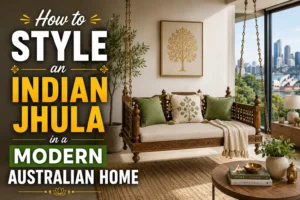
Jhula. If ceiling height permits, a ceiling-mounted jhula is a signature Punjabi element. Otherwise a freestanding frame jhula provides the same character.
Coffee table. Marble-top or carved wooden, large enough to hold tea service for multiple guests. A brass tray is a traditional addition.
Wall art. One significant piece — a family portrait, a religious image, or a large carved panel. Resist filling walls with many small pieces.
Rug. A larger rug anchoring the seating arrangement. Traditional patterns or solid colour — avoid busy modern patterns that compete with the furniture.
Lighting. Layered — overhead, table lamps, accent lighting. All warm temperature.
Dining Room
Punjabi dining is an event.
Dining table. 6 or 8 seater minimum. Carved wooden, marble-top, or a royal dining set. Should be the dominant piece in the room.
Buffet table. Practical for storing everyday and celebration dishware, plus serving during gatherings. Matches the dining set in style.
Ceremonial serving pieces. Traditional brass or silver serving platters displayed on the buffet. These come out during festivals and gatherings.
Wall decoration. A single large piece — religious imagery, family photography, or carved panel.
Pooja Room or Mandir Corner
For Sikh families, the prakash or Palki Sahib area is the most sacred part of the home.
Dedicated space. A room or corner set aside entirely for religious observance. Clean, dedicated, respected.
Palki Sahib. For homes observing daily prakash, a proper handcrafted Palki Sahib is central. Sized to the space.
For Hindu Punjabi families, a proper mandir serves the same role. Size and style depends on home size and tradition.
Seating. Low carpet or seating cushions for congregation during religious observance.
Lighting. Warm-white LED for ambient illumination. Oil lamps or diyas for traditional illumination during prayer.
Master Bedroom
Carved king-size bed as the centrepiece. Traditional Punjabi carving motifs on the headboard — geometric, floral, or architectural.
Matching dressing table and bedsides.
Bedding in traditional patterns or colours — saffron, red, gold, or cream with embroidered detail.
Accent piece. A jhula in the corner, or a small mandir, or framed religious imagery.
Avoid mandir placement directly facing the bed.
Kitchen
Kitchens in Punjabi homes balance modern functionality with traditional cooking needs. Practical considerations:
Ventilation is critical. Strong rangehoods and good airflow for tandoor-style cooking and heavy spice use.
Storage for spices. Traditional masala dabbas (spice boxes) benefit from dedicated shelving.
Serving space. A peninsula or island for preparing large family meals.
Decorative touches. Brass or copper pots displayed on open shelves. Traditional tea-making set displayed prominently.
Outdoor Spaces
Verandahs and patios are integral to Punjabi home life.
Charpai. A traditional rope bed on the verandah — authentic Punjabi touch.
Jhula. Outdoor jhula for evening family time.
Seating. Comfortable outdoor furniture that accommodates gatherings.
Lighting. Warm outdoor lighting for evening use.
Adapting for Australian Homes
Standard Australian homes differ from traditional Punjabi homes in layout and climate. Practical adaptations:
Smaller rooms. Scale furniture accordingly — 6-seater sofa sets instead of 9-seaters, medium mandirs instead of large.
Open-plan layouts. Define the Punjabi character through furniture groupings, rugs, and lighting rather than walls.
Climate adjustments. Solid timber furniture handles Queensland humidity well with proper care. Avoid fabric-heavy upholstery in very humid areas.
Rental constraints. Focus on movable pieces — furniture, textiles, accessories. Avoid permanent modifications.
Conclusion
A Punjabi home interior is about warmth, family, tradition, and craft. The core elements — handcrafted furniture, rich textiles, religious and cultural pieces, hospitality spaces — translate well to Australian homes. Adapt the scale and layout for Australian housing, but preserve the character.
| Browse our traditional Punjabi range, visit the showroom, or call 0404 000 536. |
FAQs
What makes a Punjabi home interior distinctive?
Warm colours (saffron, gold, red), rich textiles, traditional furniture pieces (carved sofas, jhulas, charpais), Sikh religious elements (khanda imagery, Palki Sahib, religious art), and a strong emphasis on hospitality spaces for extended family.
Can I create a Punjabi interior in an Australian rental?
Yes. Focus on movable elements — furniture, textiles, decor accents — rather than built-in changes. Traditional pieces like jhulas, charpais, small mandirs, and religious art can be arranged in any rental without permanent modifications.
How do I balance Punjabi tradition with a modern Australian lifestyle?
Mix traditional pieces with contemporary basics. Modern sofa plus carved coffee table. Contemporary kitchen with Punjabi textile accents. Modern bedroom with traditional dressing table. The mix avoids a themed feeling while preserving cultural character.