
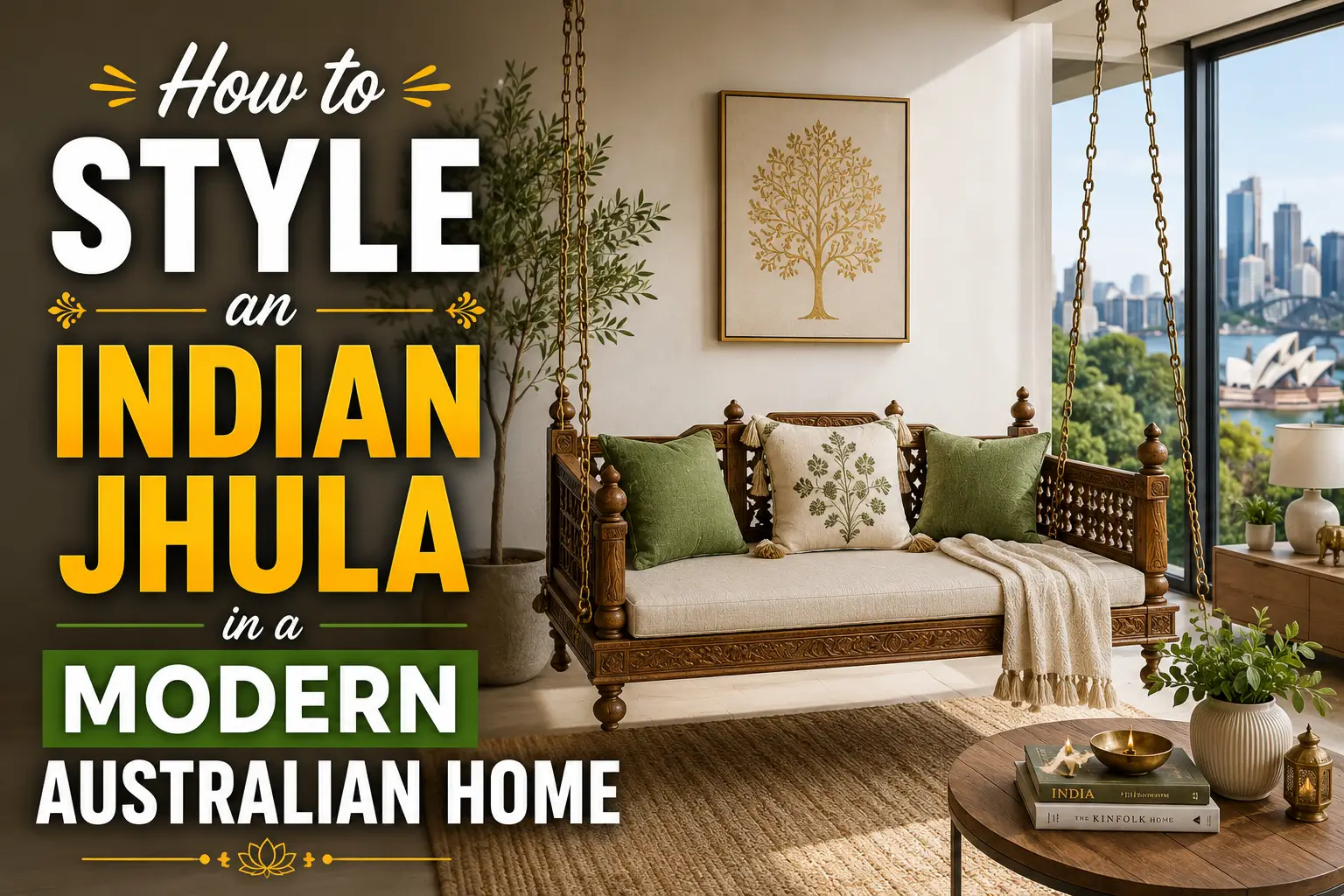
A jhula is one of the most distinctive pieces of Indian furniture you can add to a home. It is also one of the most versatile — a jhula can read as traditional Punjabi, contemporary luxury, or bohemian modern depending on how it is styled. This guide walks through placement, styling, and integration into modern Australian interiors.
Why a Jhula Works in Modern Homes
Jhulas have sculptural presence. The form — a seat suspended from a frame — is inherently interesting. Unlike most furniture, which sits passively in a room, a jhula engages the space.
They invite use. A jhula is genuinely comfortable and fun. Kids love them. Adults find them relaxing. Guests notice them.
They bridge traditional and modern. Done right, a jhula can be a subtle cultural signifier or a bold statement piece depending on the styling.
Choosing the Right Jhula for Your Style
Traditional heavy carved jhulas suit Royal Collection interiors, Punjabi traditional homes, and heritage properties. Dense carving, solid frame, traditional cushioning.
Lightly carved or modern-profile jhulas suit contemporary interiors, apartments, and homes leaning minimalist. Cleaner lines, lighter wood, subtle detail.
Industrial frame jhulas with steel or powder-coated metal frames suit industrial or modern-rustic interiors. Very different feel from traditional wooden jhulas.
Outdoor jhulas with weatherproof construction work on patios and verandahs regardless of interior style.
Placement Ideas
Living room statement. A jhula in the living room, positioned against a feature wall or in a corner, becomes the focal point of the room. Allow 60cm clearance each side for swinging and standing/sitting.
Master bedroom reading nook. A single-seat jhula in a corner of the master bedroom, paired with a floor lamp and a small side table, creates a dedicated reading space.
Entryway. A jhula near the entrance (particularly in homes with large entry foyers) sets a welcoming tone. Typically paired with a console table or a decorative piece.
Verandah or covered patio. The traditional placement. An outdoor-specification jhula on the verandah for evening use.
Sunroom or enclosed outdoor room. For Brisbane homes with sunrooms, a jhula provides year-round usable seating.
Cushion Styling
For a traditional look: rich velvet or silk cushions in jewel tones (saffron, burgundy, royal blue, emerald). Embroidered or mirror-work detail. 5–7 cushions of varying sizes layered deep.
For a modern look: neutral cushions in cream, grey, tan, or navy. Subtle texture (linen, wool, woven). 3–5 cushions maximum. Simple patterns if any.
For a bohemian look: mixed textile patterns and colours. Block prints, embroidery, and woven textures combined. Less formal arrangement, more casual layering.
For outdoor: weather-resistant cushions with water-repellent covers. Neutral or warm earth tones. Removable covers for washing.
Lighting Around the Jhula
A jhula benefits from dedicated lighting.
Floor lamp beside the jhula, warm colour temperature, with adjustable head for reading.
Pendant light above, particularly effective for a jhula in a specific nook or corner.
String lights or fairy lights for a festive or decorative feel, particularly during festivals.
Window placement. A jhula near a window with natural light during the day is especially appealing.
Complementary Pieces
Side table. A small carved or marble-top side table for tea, books, or personal items.
Floor rug. A rug beneath the jhula visually anchors the piece and defines the area.
Wall art or feature. Behind the jhula, a large piece of wall art (framed religious imagery, a carved wall panel, or abstract painting) provides visual backing.
Plants. A large indoor plant (fiddle-leaf fig, palm) beside the jhula softens the setup and adds life.
Installation Considerations
Ceiling-mounted jhulas require structural support. Attach to a load-bearing beam or joist with hardware rated to 200kg safe working load.
Freestanding frame jhulas need level floor and clearance for swinging. No structural ceiling attachment required.
For rental properties, freestanding is typically the only option. For owned homes, either works.
Brisbane metro customers: we install ceiling-mount jhulas. Interstate: DIY with instructions, or engage a local handyman.
Safety
Check fixings monthly. Tighten any loose hardware immediately.
Do not exceed the safe working load (200kg on most models).
Supervise children. Jhulas are fun for kids but the swinging motion requires adult supervision for young children.
Avoid slippery floors below. If the jhula is over tile or polished concrete, consider a rug to cushion potential falls.
Seasonal Styling
Summer: light fabric cushions, breezy throws, tropical plants nearby, outdoor placement.
Winter: heavier cushions, warm throws (wool or velvet), string lights, indoor placement by the fireplace or window.
Festivals: elaborate cushions and throws, floral garlands draped from the frame, decorative lighting.
Everyday: simple styling, a throw blanket, a book and cup of tea on the side table.
Conclusion
A jhula is a genuinely useful statement piece that works in most Australian interiors when styled thoughtfully. Choose a jhula that matches your style (traditional or modern), place it where it can be used and admired, style with appropriate cushions and complementary pieces, and install safely. The result is a piece that guests notice and family genuinely enjoys.
| Browse our jhula range, visit the showroom, or call 0404 000 536 for installation advice. |
FAQs
Can a jhula work in a modern minimalist interior?
Yes. A jhula is a sculptural piece with strong form — it reads as a distinctive statement in otherwise minimal interiors. Choose a cleaner-lined jhula (less ornate carving) and style with simple, neutral cushions for a modern look.
What cushions work best on a jhula?
For a traditional look, use richly coloured cushions with embroidery or mirror work. For a modern look, use neutral cushions in cream, grey, or navy with subtle texture. Layer 3–5 cushions of varying sizes for a comfortable and styled result.
Where should I install a jhula in the home?
Living room (statement placement), verandah (traditional placement), master bedroom corner (reading nook), or large entryway (welcome statement piece). Allow 60cm clearance each side for swinging.