
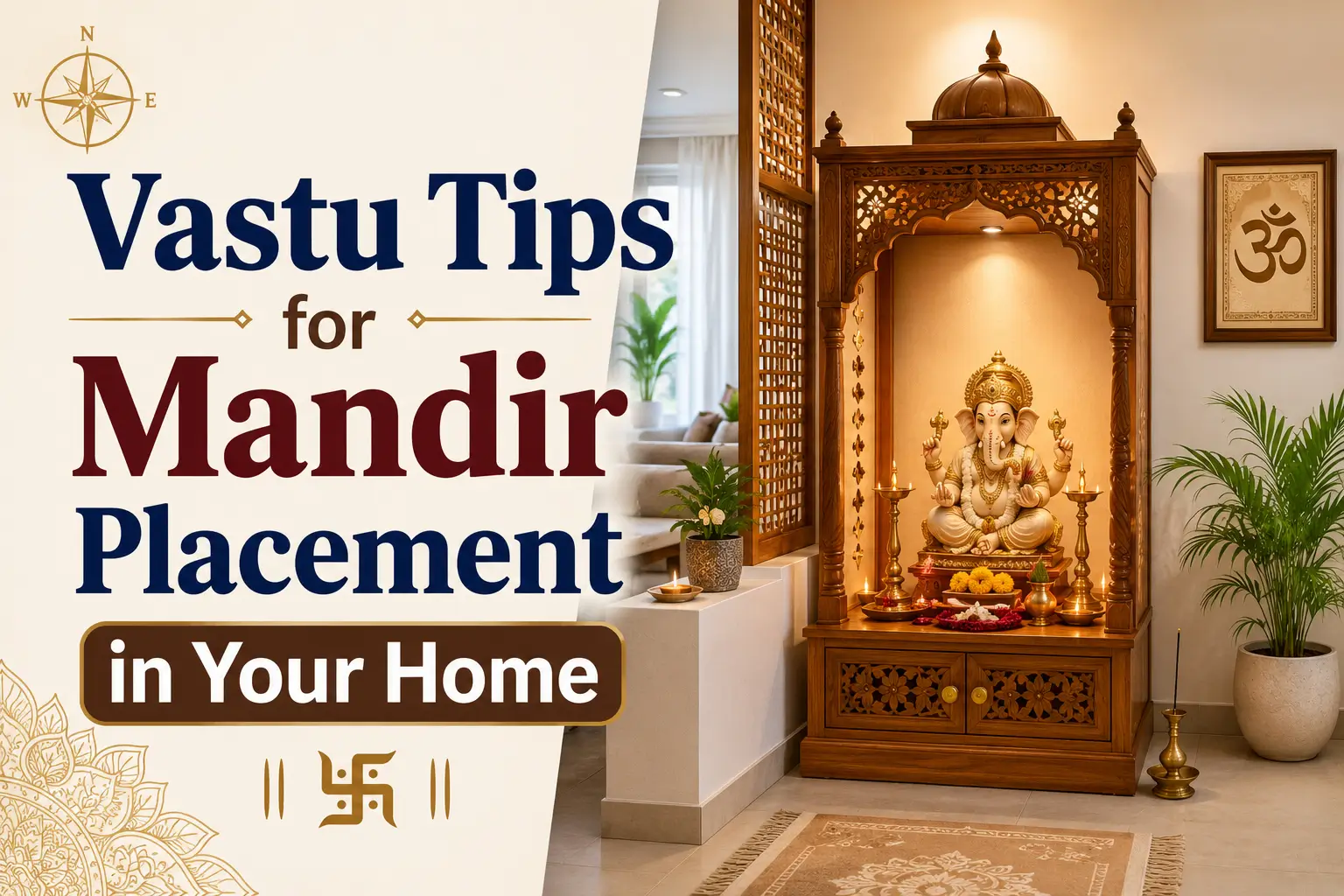
Vastu Shastra is the traditional Hindu system of architecture and spatial arrangement. It offers specific guidance on how elements of a home should be positioned to support harmony, prosperity, and spiritual well-being. For mandir placement, Vastu guidance has been followed for centuries. This guide covers the key principles.
The North-East Corner
The north-east corner of the home is considered the most auspicious location for a mandir. In Vastu tradition, this quadrant is associated with Ishanya — the direction of the divine — and with spiritual and mental clarity.
In practice, this means identifying the north-east corner of your home (or of a specific room) and positioning the mandir there. For apartments, the north-east corner of the main living area is typically chosen.
If a dedicated pooja room is possible, positioning the room itself in the north-east corner of the home is ideal.
Deity Direction
Deities in the mandir should face east or west. This allows the devotee to pray facing east (the direction of the rising sun, associated with divine energy) or north (the direction of prosperity).
South-facing deities are traditionally avoided. If the home’s layout forces this, placing the mandir on the north-east wall so deities face north-east (a reasonable compromise direction) is sometimes preferred over strict south-facing.
The devotee’s position during prayer matters too. Ideally the devotee faces east or north while praying. North-east corner placement usually allows this naturally.
Rooms to Avoid
Vastu guidance identifies specific rooms where mandirs should not be placed.
Bedrooms. Particularly avoided if the mandir would face the bed. The logic is that sleep and prayer are different states, and mixing the energies creates imbalance.
Bathrooms. Never appropriate for a mandir — the energies are considered opposing.
Kitchens. The heat and smells of cooking are considered inappropriate neighbours for sacred space.
Under staircases. Staircases carry continuous movement and are not suitable for sacred stillness.
Against walls shared with bathrooms. Even if the mandir is in an appropriate room, if the wall behind the mandir is shared with a bathroom, the placement is not ideal.
Height and Elevation
Deities should be positioned at chest height or above when the devotee is standing. This is both practical (easier to perform ceremonies) and spiritual (the sacred should not be below the physical body).
For wall-mounted mandirs, this typically means installation with the base 90–120cm from the floor.
For freestanding mandirs, the deity shelf is typically at 100–140cm — matching the design of most traditional mandirs.
Clean and Dedicated Space
Vastu emphasises that the area around the mandir should be clean, uncluttered, and dedicated. Avoid placing the mandir in a multi-use corner where toys, papers, or general clutter accumulate.
A pooja room or dedicated alcove is ideal. For homes without a dedicated space, a designated corner of the living room, set apart visually, is the next-best option.
Light and Ventilation
The mandir area should have natural light if possible — a window on the east or north side allows morning light to reach the deities, which is considered auspicious.
Ventilation matters. Incense and oil lamps are part of daily worship; adequate airflow prevents accumulation of smoke.
Practical Adjustments
Strict Vastu ideals are not always achievable in modern Australian homes. Apartment layouts, rental properties, and heritage homes often do not permit perfect adherence.
Common practical adjustments:
If north-east placement is not possible, north or east walls are acceptable.
If a dedicated pooja room is not possible, a corner of the living room separated by a screen or shelving is used.
If deity direction cannot be east or west, positioning to north is acceptable as a second choice.
For each compromise, the principle is to come as close as reasonably possible to the traditional guidance while acknowledging modern home realities.
Consulting a Vastu Expert
For complex home layouts, multi-storey builds, or specific concerns, consulting a Vastu expert provides tailored guidance. Many Indian community centres and gurdwaras in Australia can refer you to local Vastu consultants.
Our Mandir Team
For practical placement advice and mandir selection, our team at the Underwood showroom can walk through options with you. Bring a floor plan of your home — we can mark recommended positions based on standard Vastu principles.
Conclusion
Traditional Vastu guidance for mandir placement has depth, but the core principles are straightforward: north-east preferred, deities facing east or west, avoid bedrooms and bathrooms, elevated above body level, clean and dedicated space. Following these principles as closely as your home allows produces a mandir setup that feels right.
| Browse our mandir range, visit the showroom for placement consultation, or call 0404 000 536. |
FAQs
Which direction should the mandir face?
Traditional Vastu places the mandir in the north-east corner of the home with the main deities facing east or west. The devotee prays facing east (toward rising sun) or north (prosperity direction).
Can a mandir face south?
Traditional Vastu discourages south-facing mandirs. If circumstances make a south-facing position unavoidable, many families place the mandir on the north-east wall of a south-facing room so deities still face a favourable direction.
Is it wrong to have a mandir in a bedroom?
Traditional Vastu discourages bedroom mandirs, particularly ones facing the bed. For homes with no other option, a small wall-mounted mandir placed so deities do not face the bed, in a quiet corner, is sometimes used. Consult your family’s traditions.